

Before a single guest rings the doorbell, your home has already told a story through its roofline, front walkway, driveway, and curb appeal. Small maintenance details that homeowners often overlook are the very things visitors notice first, and they shape impressions in ways that are hard to undo. The good news is that most of these signals are fixable with routine attention, timely repairs, and a bit of planning.
This guide walks through the systems and surfaces that quietly speak for your home, so you can address them before anyone else does.
The Roofline Sets the First Impression
Long before anyone reaches your front door, they glance up, and a sagging, streaked, or patchy roof reads as neglect even if the rest of the home is immaculate. Missing shingles, moss growth, or visible wear along the edges suggest deferred maintenance and can make buyers or guests question what else has been ignored. Getting a professional opinion once a year helps you catch small issues before they become expensive ones.
Many homeowners wait until a leak appears indoors, but by then the damage has often spread into the attic or walls. Reputable roofing companies typically offer free inspections and can spot early signs of trouble like cracked flashing or worn granules that are invisible from the ground. Scheduling this kind of checkup every couple of years keeps your roof looking sharp and performing well.
- Look for curling, cracked, or missing shingles from the ground with binoculars
- Check gutters for granule buildup, a sign of shingle deterioration
- Note any sagging spots along the ridge or eaves
- Watch for moss or algae streaks, which trap moisture
Siding Condition Reflects Ongoing Care
Siding covers more square footage than almost any other exterior feature, so fading, warping, or cracked panels are hard to miss. Guests often register the condition of siding subconsciously, associating clean, uniform exteriors with a well-run household. Beyond appearance, damaged siding can let moisture behind the walls, leading to rot or mold that is far costlier to fix than the siding itself.
If your home’s exterior looks tired despite regular cleaning, it may be time to consult siding companies about repair or replacement options. Many offer materials that resist fading and impact damage far better than older products, which can extend the years between major updates. Investing in this upgrade also tends to pay off if you ever decide to sell.
- Inspect for warping, bubbling, or loose panels
- Check corners and seams for gaps that let water in
- Compare faded sections to a protected area to gauge sun damage
- Consider impact-resistant materials in storm-prone regions
The Garage Door Communicates More Than You Think

The garage door often takes up a large visual portion of a home’s front facade — in many cases, a third or more of what’s visible from the street — yet it is one of the most neglected components of curb appeal. Dents, peeling paint, or a door that sticks when opening sends a message of general upkeep issues, even if the problem is purely cosmetic. A faded color that no longer matches the trim or a panel replaced with a slightly different shade can be just as noticeable to a passerby as a crack in the driveway.
Since the garage door operates daily, often multiple times a day, mechanical problems also tend to surface quickly as noise, slow response, or uneven movement. A door that groans, jerks, or hesitates partway through its cycle usually points to worn rollers, a failing opener, or springs nearing the end of their lifespan. Left unaddressed, these small mechanical tells can eventually become safety concerns, not just aesthetic ones.
Homeowners who keep the garage door lubricated, aligned, and freshly painted are, often unconsciously, signaling that the rest of the home receives the same attention. Guests and neighbors rarely think about garage doors consciously, but they register the impression instantly — smooth, quiet, and clean reads as “well cared for,” while dented, noisy, or mismatched reads as “overlooked.”
The garage door is often the largest single feature on a home’s facade, yet it’s easy to overlook until something goes wrong. Dents, faded paint, uneven movement, or a door that shudders and groans on its way up all send a message of neglect before a guest even reaches the front walk. A smooth, quiet, well-aligned door, by contrast, signals that the rest of the house is likely just as well cared for.
A reliable garage door company can service springs, tracks, and openers, extending the life of the unit and preventing a sudden breakdown at an inconvenient time. Most technicians recommend a professional tune-up once a year, checking cable tension, roller wear, and sensor alignment to catch small issues before they become expensive failures. Torsion springs, for example, are rated for a certain number of open-close cycles and typically need replacement every 7 to 12 years depending on usage.
Routine lubrication and alignment checks are inexpensive compared to a full replacement, and they keep the door operating quietly and smoothly. A simple silicone-based lubricant applied to hinges and rollers twice a year can prevent much of the grinding and squeaking that makes a door feel worn out. Since the garage door is used multiple times a day, keeping it in good shape protects both curb appeal and daily convenience, while also avoiding the safety risks that come with a door that sticks or reverses unpredictably.
- Listen for grinding or scraping sounds during operation, which often signal worn rollers or a chain needing lubrication
- Check that the door closes evenly on both sides, since a visible tilt usually points to a misaligned track or a failing cable
- Test the auto-reverse safety feature regularly by placing a block of wood in the door’s path and confirming it retracts on contact
- Inspect weatherstripping along the bottom edge for cracks or gaps that let in drafts, pests, or moisture
- Repaint or refinish panels showing sun fade or chipping, ideally with a UV-resistant exterior paint every 3 to 5 years
- Tighten visible hardware like hinges and brackets, since loose bolts are often the first sign of bigger mechanical issues ahead
Water Heater Performance Affects Comfort and Trust
While guests rarely see your water heater, they notice its effects immediately, whether it is lukewarm water during a shower or a musty smell from a slow leak in the utility closet. A water heater nearing the end of its lifespan can also become a safety concern if pressure relief valves or thermostats start to fail. Keeping this system serviced is one of those invisible details that keeps a household running smoothly.
If you notice inconsistent temperatures, rumbling noises, or rusty water, scheduling water heater repair promptly can prevent a full tank failure that floods a utility room or basement. Most tanks last eight to twelve years, and sediment buildup is often the culprit behind reduced efficiency. Flushing the tank annually is a simple task that extends its working life considerably.
- Rusty or discolored water often signals internal tank corrosion
- Unusual noises can indicate sediment buildup at the bottom of the tank
- A pilot light that won’t stay lit may point to a failing thermocouple
- Water pooling near the base warrants immediate attention
Gas Line Integrity Is a Safety Priority
Homes with gas appliances rely on a network of lines that most people never think about until something goes wrong. A faint rotten-egg smell, hissing sounds near appliances, or dead vegetation over a buried line are all signs that warrant immediate professional attention. Because gas issues can escalate quickly, this is not an area for guesswork or delayed action.
Whether you are adding a new range, outdoor fire feature, or generator hookup, proper gas line installation ensures connections meet code and function safely for years. Licensed technicians pressure test new lines before they are put into service, which catches leaks before appliances are ever connected. This upfront diligence protects both your household and your home’s resale value.
- Never attempt to repair or extend a gas line yourself
- Watch for hissing sounds or a sulfur-like odor near appliances
- Schedule a professional check if you smell gas intermittently
- Keep appliance vents and connections clear of debris
Termite Activity Undermines Structural Confidence
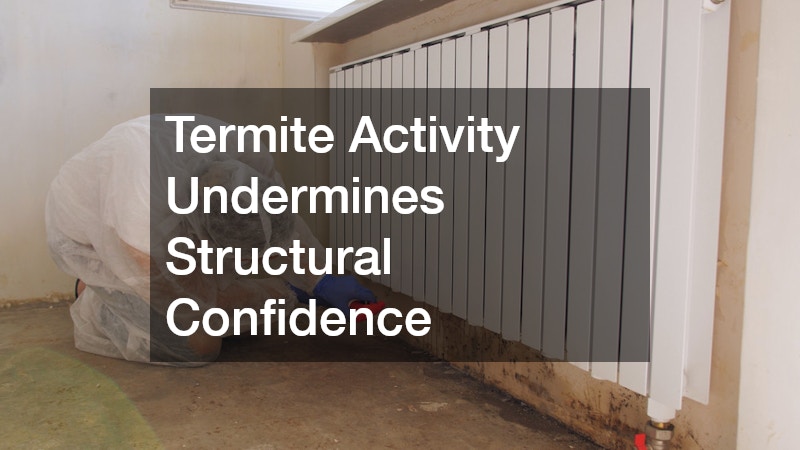
Wood-destroying pests work silently, often for years, before visible damage appears in the form of sagging floors, hollow-sounding trim, or discarded wings near windowsills. A home with an unresolved pest history can lose significant value, and buyers frequently request documentation before closing a sale. Staying ahead of this issue protects both the structure and your peace of mind.
An annual termite inspection is a small investment compared to the cost of structural repairs after an infestation has taken hold. Inspectors check crawl spaces, foundation lines, and wood-to-soil contact points where colonies commonly enter. Catching activity early often means localized treatment rather than extensive remediation.
- Look for mud tubes along foundation walls
- Tap on wood trim to check for a hollow sound
- Watch for discarded wings near windows or doors in spring
- Keep firewood and mulch away from the foundation
Backyard Pools Signal Lifestyle and Maintenance Habits
A pool can be one of the most impressive features of a backyard, but only when it is properly maintained; cloudy water, cracked decking, or a torn liner send the opposite message. Guests touring a backyard often judge the entire outdoor space based on how well the pool area is kept. Consistent water testing and seasonal upkeep keep it looking inviting rather than neglected.
If you are planning a new installation, working with an experienced pool builder ensures the design fits your yard’s drainage, soil conditions, and long-term maintenance needs. For those specifically wanting an in-ground feature, comparing a few in ground pool companies before committing helps you understand differences in materials, warranties, and construction timelines. Taking time upfront to vet contractors reduces the chance of costly surprises during installation.
- Test water chemistry weekly during swim season
- Inspect decking for cracks or uneven settling
- Check pump and filter systems each spring
- Ask contractors about warranty terms before signing a contract
Driveway and Foundation Stability Start Below the Surface

First impressions start at the curb, but what’s happening six inches to two feet below that curb often matters more than the surface finish. Cracked driveways, sunken walkways, or uneven patio slabs typically trace back to poor soil compaction, erosion, or hidden voids beneath the surface. In many cases, water infiltration is the root cause, washing away the fine particles that once supported the slab and leaving an air pocket that the concrete eventually settles into.
These problems rarely stay cosmetic for long. A quarter-inch settlement crack today can become a half-inch trip hazard within a year or two, especially in regions with freeze-thaw cycles that expand existing gaps every winter. Left unaddressed, shifting soil can also transfer stress to adjacent structures, including porch footings, garage slabs, or even the home’s foundation walls.
Homeowners often reach for a patch-and-repave fix without realizing it treats the symptom rather than the cause. Techniques like polyurethane foam injection or slabjacking can fill subsurface voids and re-stabilize the slab for a fraction of full replacement cost, but only if a contractor has properly diagnosed the extent of the erosion first. Skipping that diagnostic step means the same crack, sink, or slope is likely to reappear within a season or two.
Understanding what lies beneath your hardscaping — soil type, drainage patterns, grading, and past repair history — helps you make smarter, longer-lasting repair decisions rather than repeatedly covering up the same underlying issue.
A cracked driveway or an uneven walkway often signals something happening well beneath what you can see. Many contractors now use flowable fill to stabilize voids under slabs and driveways because it self-levels and cures into a strong, uniform base, typically reaching workable strength within a few hours and full strength within a day or two. This material is particularly useful for filling abandoned utility trenches, correcting settlement issues, or backfilling around foundation walls without the mess of traditional compaction methods.
Compared to compacted gravel, flowable fill eliminates the guesswork of layering and tamping, which reduces the chance of future settling. It flows into irregular spaces and tight corners that would otherwise require hand-tamping, making it a smart choice for tricky repair zones near pipes, wiring, or foundation footings. Some mixes can even be engineered for future excavation, so utility access isn’t sacrificed for stability.
Cost is worth discussing upfront, since flowable fill can run higher per cubic yard than compacted fill, but the labor savings and reduced callback risk often offset that difference. Asking a contractor whether this option fits your repair scope, and how it compares to patch-and-hope alternatives, can lead to a longer-lasting fix than surface patching alone.
- Watch for cracks that widen seasonally or exceed 1/4 inch, a sign of ongoing settlement rather than normal curing
- Check for pooling water near the foundation after rain, especially puddles that linger more than 24 hours
- Note any doors or windows that stick or no longer latch properly, which can indicate shifting or uneven settling
- Look at the driveway’s slope to confirm it drains away from the house instead of toward it
- Ask contractors about soil stabilization options, like compaction grouting or french drains, before repaving
- Get a soil test if you’re in an area with expansive clay, since moisture swings can cause repeated heaving
Storm and Water Damage Recovery Shapes Long-Term Value

Every home eventually faces some form of weather event, and how quickly damage gets addressed often determines whether it becomes a minor repair or a major renovation. Water stains on ceilings, warped flooring, or a musty smell are signs that moisture has intruded and needs prompt attention. Delaying these repairs allows mold and structural decay to spread further than the original damage.
After a significant storm, flood, or fire event, bringing in a qualified restoration company quickly can make the difference between saving materials and replacing them entirely. These specialists use moisture meters and industrial drying equipment to address problems that are not visible to the untrained eye. Acting within the first 24 to 48 hours after water intrusion significantly improves the odds of a full recovery.
- Document damage with photos before cleanup begins for insurance purposes
- Address standing water within 24 to 48 hours to limit mold growth
- Check attics and crawl spaces after storms, not just visible living areas
- Keep a list of trusted contractors on hand before an emergency happens
Conclusion
Your home is constantly communicating, whether through a gleaming roofline, a well-kept pool, or a driveway free of cracks and unevenness. Taking a proactive approach to these systems, rather than waiting for a guest to notice a problem first, protects both your investment and your peace of mind. Start with a walk around your property this weekend, note what needs attention, and tackle the most pressing items first. A well-maintained home speaks for itself long before anyone reaches the front door.
