

When one system in your home fails, it rarely stays isolated for long. A leaky pipe can warp flooring and short out wiring, while a neglected roof can lead to attic moisture that undermines insulation and framing. Understanding how your home’s major systems are connected helps you catch small problems before they cascade into expensive, overlapping repairs. This article breaks down the most common failure chains in a home and shows you how to stay ahead of them.
How Aging Wiring Triggers Failures in Other Systems
Electrical systems are often the hidden root cause behind problems that seem unrelated at first glance. Flickering lights, warm outlets, or a furnace that shuts off unexpectedly can all trace back to overloaded circuits or deteriorating wiring. Homes built more than 30 years ago often have wiring rated for far less demand than today’s households place on them, with modern appliances, HVAC systems, and electronics drawing significantly more current than the original panel was designed to handle. This mismatch shows up in subtle ways before it becomes an obvious failure.
A circuit breaker that trips whenever the AC and microwave run at the same time isn’t a coincidence; it’s a sign the wiring is struggling to keep pace with the home’s actual power needs. Left unaddressed, that strain accelerates wear on the wiring insulation itself, raising the risk of shorts and, in worst cases, electrical fires.
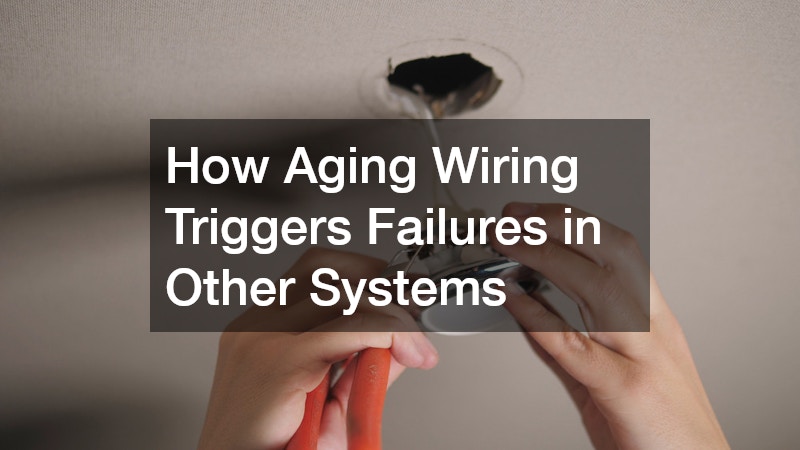
Because so many other systems depend on a steady power supply, including HVAC equipment, garage doors, and sump pumps, a weak electrical foundation puts your entire house at risk. A sump pump that loses power during a voltage drop can fail silently during a storm, leading to basement flooding.
Garage doors with worn wiring may stop responding to openers or reverse unexpectedly, creating both an inconvenience and a safety hazard. Even smaller signs, like buzzing outlets, discolored switch plates, or a persistent burning smell near the breaker box, deserve prompt attention rather than a wait-and-see approach. Addressing aging wiring early, often through a panel upgrade or a full rewiring, protects not just the electrical system but every other component in the home that relies on it.
Aging wiring rarely fails in isolation. Once insulation degrades or connections loosen, the resulting voltage fluctuations can ripple outward, straining HVAC compressors, damaging electronics, and even triggering premature failures in water heaters or garage door openers. What looks like an appliance problem is often an electrical problem wearing a different disguise.
If your home is more than 25 years old and you have not had the panel inspected, it is worth scheduling a professional evaluation before you notice obvious symptoms. A licensed electrician service can identify overloaded circuits, outdated breaker panels, and aluminum wiring that pose fire hazards long before they cause visible damage. They can also check for warning signs like warm outlets, flickering lights, or a persistent burning smell near the panel, all of which suggest deteriorating connections.
Homes built before the mid-1990s often have panels rated for far less amperage than modern households demand, especially with the added load of central air, electric vehicle chargers, and home entertainment systems. An electrician service can recommend whether a full panel upgrade makes sense or if targeted repairs will suffice for another few years. Catching these issues early often prevents cascading failures in appliances and systems that rely on consistent voltage, saving you from replacing multiple components that were really just victims of a single failing circuit.
- Flickering or dimming lights when appliances turn on, signaling that circuits are overloaded or connections have loosened with age
- Breakers that trip repeatedly during normal use, often a sign that wiring can no longer handle the home’s actual power draw
- Warm or discolored outlet covers, which point to overheating insulation or corroded wiring underneath
- Buzzing or crackling sounds from switches or outlets, a warning that connections are arcing behind the wall
- A persistent burning smell near the panel, one of the clearest indicators of overheated wires or failing components
- Outlets that no longer hold plugs snugly, letting connections loosen and generate heat over time
- Frequent need to reset GFCI outlets, which may mean deteriorating wires are tripping safety mechanisms designed to prevent shock or fire
Why Heating System Neglect Spreads to Plumbing and Air Quality
Your furnace or heat pump does more than keep rooms warm; it also regulates humidity and prevents pipes from freezing in colder months. When a heating system starts to fail, homeowners often notice cold spots first, but the ripple effects can extend to plumbing lines running through exterior walls or unheated crawl spaces. A burst pipe caused by inadequate heat is a far costlier problem than the original mechanical issue.
Annual maintenance is the simplest way to avoid this domino effect. Scheduling heating repair before the first cold snap ensures worn belts, clogged filters, or failing igniters get addressed while the fix is still inexpensive. Waiting until the system fails completely often means dealing with frozen pipes, mold from trapped humidity, and a stressful emergency repair all at once.
- Uneven heating between rooms or floors
- Pipes located near exterior walls that feel unusually cold
- A furnace that cycles on and off more frequently than usual
- Rising humidity or condensation on windows during winter
How Roof Damage Leads to Structural and Interior Problems
A roof is your home’s first line of defense, and even small amounts of damage can allow water to travel far beyond the point of entry. Missing shingles or deteriorating flashing often go unnoticed until stains appear on ceilings, but by then moisture may have already reached insulation, framing, and electrical fixtures. This is one of the clearest examples of how one failing system quietly damages several others at once.
Getting a professional inspection twice a year, especially after major storms, helps catch problems while they are still minor. Reputable roofing contractors can spot cracked flashing, worn underlayment, or granule loss that signals a shingle is nearing the end of its life. Addressing these issues promptly protects not just the roof itself but everything beneath it, from attic insulation to interior drywall.
- Granules collecting in gutters or downspouts
- Curling, cracked, or missing shingles
- Sagging areas along the roofline
- Water stains on ceilings or upper walls
How Overgrown Trees Threaten Roofing, Foundations, and Utility Lines
Trees add beauty and shade to a property, but when branches grow too close to the house they create risks that extend well beyond a scratched roof. Overhanging limbs can trap moisture against shingles, drop debris into gutters, and even make contact with power lines during storms. Root systems can also grow toward foundations and underground pipes, especially in older homes with clay or cast iron plumbing.
Routine trimming keeps these risks in check, but larger or diseased trees often require more than a homeowner can safely handle. A qualified tree service can assess which branches pose a hazard to the roof or siding and remove them before a storm turns a manageable trim into an emergency cleanup. This kind of preventive care protects your roof, foundation, and electrical service line at the same time.
- Branches within ten feet of the roofline or power lines
- Visible root heaving near the foundation or driveway
- Leaning trunks or large dead limbs
- Leaves or debris consistently clogging gutters

Why Slow Leaks Cause Damage Long Before You Notice Water
Plumbing failures rarely start as dramatic bursts; they usually begin as small, slow leaks hidden behind walls or under floors. Over time, this moisture softens drywall, warps subflooring, and creates the damp conditions mold needs to thrive. Because these leaks are often invisible in their early stages, many homeowners do not realize there is a problem until the damage has already spread.
A sudden spike in your water bill or a musty smell in a specific room are early warning signs worth investigating right away. Calling one of the best plumbers in your area for a leak detection inspection can save you from replacing flooring, cabinetry, or drywall later on. Catching a slow leak early is almost always faster and cheaper than repairing the secondary damage it causes.
- Unexplained increases in your monthly water bill
- Musty odors in bathrooms, kitchens, or basements
- Soft or discolored spots on flooring near fixtures
- Reduced water pressure in one part of the house
How Poor Drainage and Grading Undermine Your Foundation
The way water moves across your yard has a direct impact on your home’s foundation, basement, and even your landscaping investment. When soil slopes toward the house instead of away from it, water pools near the foundation and gradually seeps into basements or crawl spaces. This kind of chronic moisture exposure can lead to cracked foundations, efflorescence on basement walls, and warped flooring above.
Proper grading and drainage solutions are best handled by professionals who understand how water behaves on your specific property. Experienced landscaping contractors can regrade slopes, install French drains, or add dry wells to redirect water away from vulnerable areas. Addressing drainage issues early protects your foundation while also preserving the plants, mulch beds, and hardscaping you have invested in over the years.
- Standing water near the foundation after rainfall
- Soil that slopes toward the house rather than away
- Cracks appearing in basement walls or floors
- Mulch or plant beds that wash out repeatedly
How a Failing Garage Door Creates Security and Efficiency Problems
The garage door is one of the largest moving parts of any home, and when it fails it affects far more than convenience. A door that will not seal properly lets in drafts, pests, and moisture, which can raise energy bills and damage anything stored nearby, including vehicles and tools. Worn springs or misaligned tracks also put strain on the opener motor, which is connected to your home’s electrical system.
Routine maintenance, including lubrication and balance checks, extends the life of the entire mechanism and prevents small issues from becoming safety hazards. If you notice grinding noises, uneven movement, or a door that reverses unexpectedly, it is time to have a professional inspect the assembly before the problem worsens. A well-maintained door also adds a layer of security, since a damaged one is easier for intruders to force open.
- Grinding or scraping noises during operation
- Visible gaps or light coming through closed edges
- A door that closes unevenly or reverses without cause
- Rust or fraying on the lifting cables
Why Aging Fences Signal Bigger Property Maintenance Needs
A leaning or rotting fence is often dismissed as a cosmetic issue, but it can point to broader problems affecting your property. Wood posts that have softened at the base may indicate poor drainage or soil erosion, the same conditions that threaten your foundation and landscaping. A damaged fence also compromises the security and privacy the structure was originally meant to provide.
Replacing a fence is also a natural opportunity to reassess how water and soil move around your property line. Established fence companies can advise on post materials and footing depths that hold up better in your specific soil conditions, especially in areas with heavy clay or frequent freeze-thaw cycles. Addressing fence damage alongside drainage improvements prevents you from solving the same problem twice.
- Posts that wobble or feel soft near ground level
- Visible leaning along sections of the fence line
- Gaps forming between panels or pickets
- Consistent moisture pooling near fence posts
How Flooring and Cabinetry Damage Reveals Hidden Moisture Issues
By the time flooring or cabinetry shows visible warping, the underlying moisture problem has often existed for months. Cupped floorboards, swollen cabinet toe kicks, or peeling laminate near a sink are rarely the first sign of trouble—they’re usually the last. Wood and engineered materials can absorb moisture for weeks before the swelling becomes noticeable to the eye. Water that seeps in from a plumbing leak, poor grading, or a failing appliance connection tends to travel along subflooring before it becomes visible on the surface.
A slow drip under a dishwasher, for instance, can migrate several feet along the subfloor before it surfaces as discoloration near a baseboard. Similarly, grading issues that push water toward a foundation may not show up indoors until it has already softened subfloor sheathing or promoted mold growth in wall cavities. This hidden travel path matters because the visible damage location often doesn’t match the source. A stain near a cabinet base might actually originate from a supply line several feet away, or from condensation on a poorly insulated pipe.
Moisture meters and infrared cameras are commonly used by contractors specifically because surface inspection alone can miss 80% of the affected material. This is why replacing damaged materials without addressing the root cause usually leads to the same problem reappearing later. Swapping out warped flooring or a swollen cabinet base without tracing the moisture source typically buys homeowners only a temporary fix—often just months before symptoms return. Identifying and correcting the actual leak, grading flaw, or ventilation gap is the only way to stop the cycle for good.
Warped floorboards, buckling laminate, or carpet that stays damp long after a spill are rarely just cosmetic problems—they’re often the first visible sign of moisture traveling where it shouldn’t. Cupped hardwood, a musty smell under carpet padding, or tiles that have started to lift at the seams all point to water intrusion that may have been building for months. Catching these signs early can mean the difference between a simple repair and a full subfloor replacement. When it comes time to replace damaged flooring, visiting local carpet stores can help you find moisture-resistant options better suited to areas prone to humidity or occasional spills, such as solution-dyed carpet fibers, waterproof vinyl plank, or moisture-barrier padding. Many carpet stores can also test humidity levels in the affected room before installation, ensuring the new flooring is matched to the actual conditions rather than a best guess.
Cabinetry tells a similar story. Swollen particleboard, doors that no longer close flush, or a soft, spongy feel at the base of kitchen or bathroom cabinets usually mean water has been seeping in from a leaking supply line, a failed dishwasher gasket, or condensation from poor ventilation. Left unaddressed, this moisture can migrate into adjacent walls and flooring, compounding the damage.
If water damage has affected your cabinetry, working with custom cabinet companies allows you to replace warped units with materials designed to hold up better in that environment, such as marine-grade plywood, moisture-resistant laminates, or cabinets with sealed edges and toe-kicks. Many of these companies can also recommend layout adjustments, like raising cabinet bases or adding ventilation panels, that reduce future risk. Pairing these upgrades with a fix for the original moisture source—whether that’s a leaky pipe, poor grading outside, or inadequate bathroom exhaust—ensures your investment actually lasts, rather than simply delaying the same damage a second time.
- Warping, bubbling, or discoloration in flooring, especially along seams or edges where boards meet
- Cabinet doors and drawers that no longer close flush, or that stick in humid weather
- A musty smell coming from cabinet interiors, particularly under sinks where pipes run
- Soft spots underfoot near sinks, dishwashers, or refrigerators with water lines
- Nail pops or gaps appearing in hardwood within 10-15 feet of a suspected leak source
- Swollen or crumbling particleboard at the base of cabinets, often the first sign before visible mold
- Peeling laminate or bubbling vinyl flooring, which signals moisture trapped beneath the surface
Your home functions as a connected system, which means a small issue in one area rarely stays contained for long. Regular inspections, prompt repairs, and choosing qualified professionals for each job are the most reliable ways to break the chain before it starts. Start by walking through your own home with this list in mind, noting any warning signs mentioned above. Addressing even one or two of these issues now can save you from a much larger, more expensive repair down the road.
